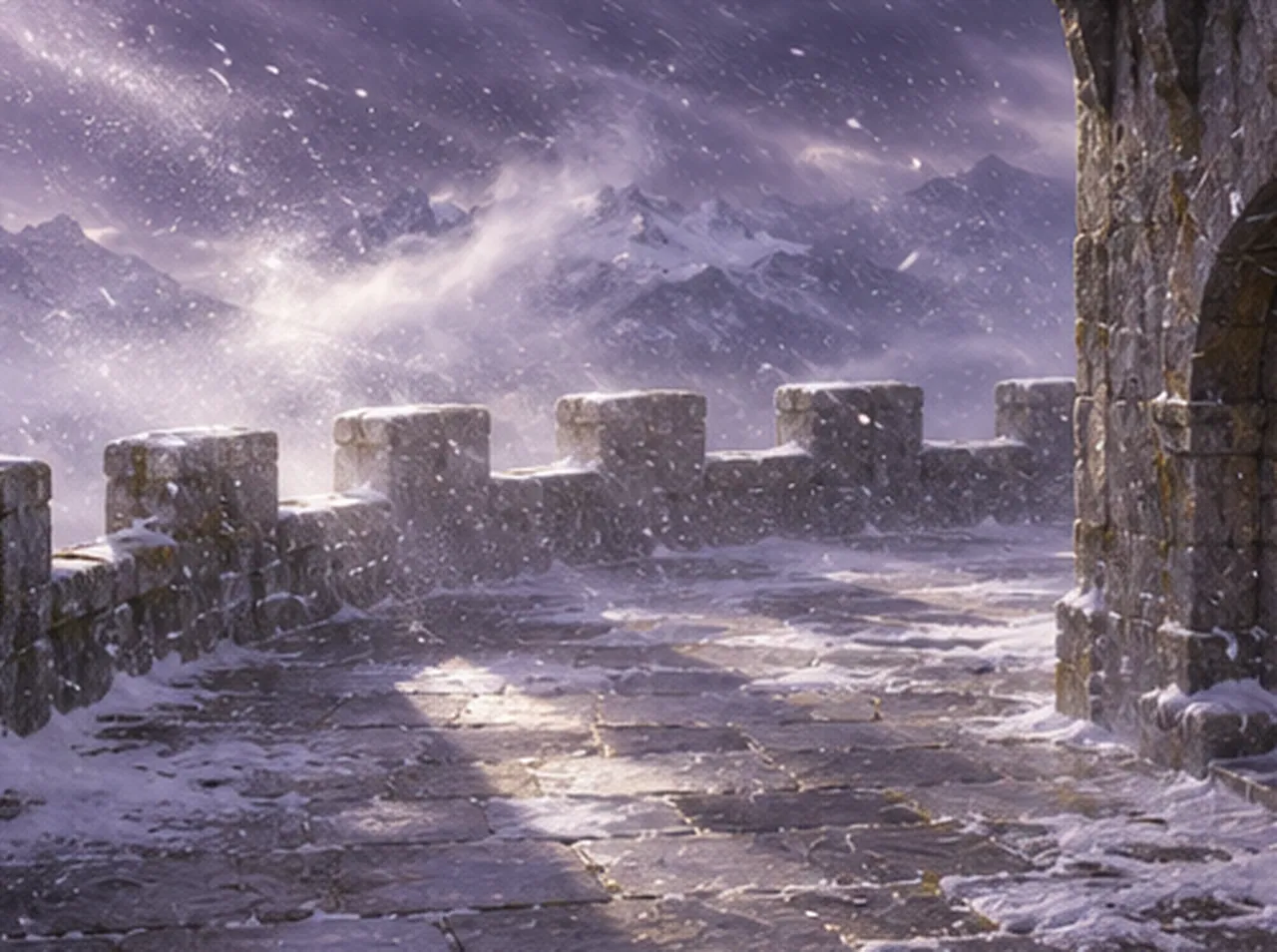
Stone Edges behind a Snow Veil
Snow near the battlements looks thin until it covers the horizontal ridge that locates the first landing. A young griffin waits on a lower roof while the keeper tries to name the edge that has disappeared. The first picture of the scene gave it only a faint outline above the fog. We added an older stone line below the fog and a sheltered opening the player can use without a view of every upper detail. The harder weather becomes a reason to reconsider the route without waiting in a place the creature cannot hold.
Use an edge low enough to stay in view
A low roof stable has one uneven stone cap. Its shadow reads from the practice stair to a halfway point around the spire. The snow passes above it first. From the stair a keeper can use that edge to locate the wall behind the more exposed roof even when part of the open ledge disappears. Two Ribbons below the North Roof deals with how a smaller signal can remain available after a sightline changes. The stone cap works as a fixed point to keep comparing. It is not a substitute for seeing the floor of the landing itself.
Keep another arrival within the remaining view
The sheltered run reaches an arcade behind a deeper wall. A second outer beam can be distinguished from the rear wall because the two are interrupted by different openings. Pale fabric catches a little light beneath the low line. The keeper can choose that route while the sky above it remains cloudy, provided the wider area around the ledge is still visible. A Perch for the Crosswind describes how the bay needs enough clearance for the young griffin to settle. At this point there is also a reason to wait if both edges have faded.
Make the weather change gradual enough to review
A clear picture next to an entirely hidden picture lets a player recognize the before and after without knowing when it became unsafe within the imagined scene. Instead let the snow cover the corner first. Give the low cap a slightly darker tone so it takes longer to disappear. The player can then compare a brief remaining horizontal line with the known shelter opening before deciding to turn. The Outside Edge of the Flight Circle keeps an approach change available while the wall is still partly visible. In this trial a broad turn matters because it makes enough of the lower line available to measure the change.
Show the fill of the bay without bright artificial signs
The inner opening carries cloth and the gloss of handled stone. In the fog those details can imply a place to rest without lighting a large arrow over the frame. Put a softly lit ripple of fabric just within the sheltered area so a person can judge which of the two openings is connected to it. The rear plane still has color and texture. A young griffin moving in front of it breaks the line for a moment and settles on the inner floor. The image can describe shelter without losing its weather as part of the setting.
Let an earlier route remain a useful memory
Review the route from the stair after the test. Ask which edge was hardest to see, which one remained useful, and where the player could choose to return. The player does not need to remember every roof line. A visible cap and one reliable opening should help them take a different path if the top of the tower changes quickly. The prototype can hold a familiar viewpoint at both ends of the route and use the snow as an obstacle with a place. That keeps the keeper’s next decision grounded in the tower instead of in a warning detached from it.