The Outside Edge of the Flight Circle
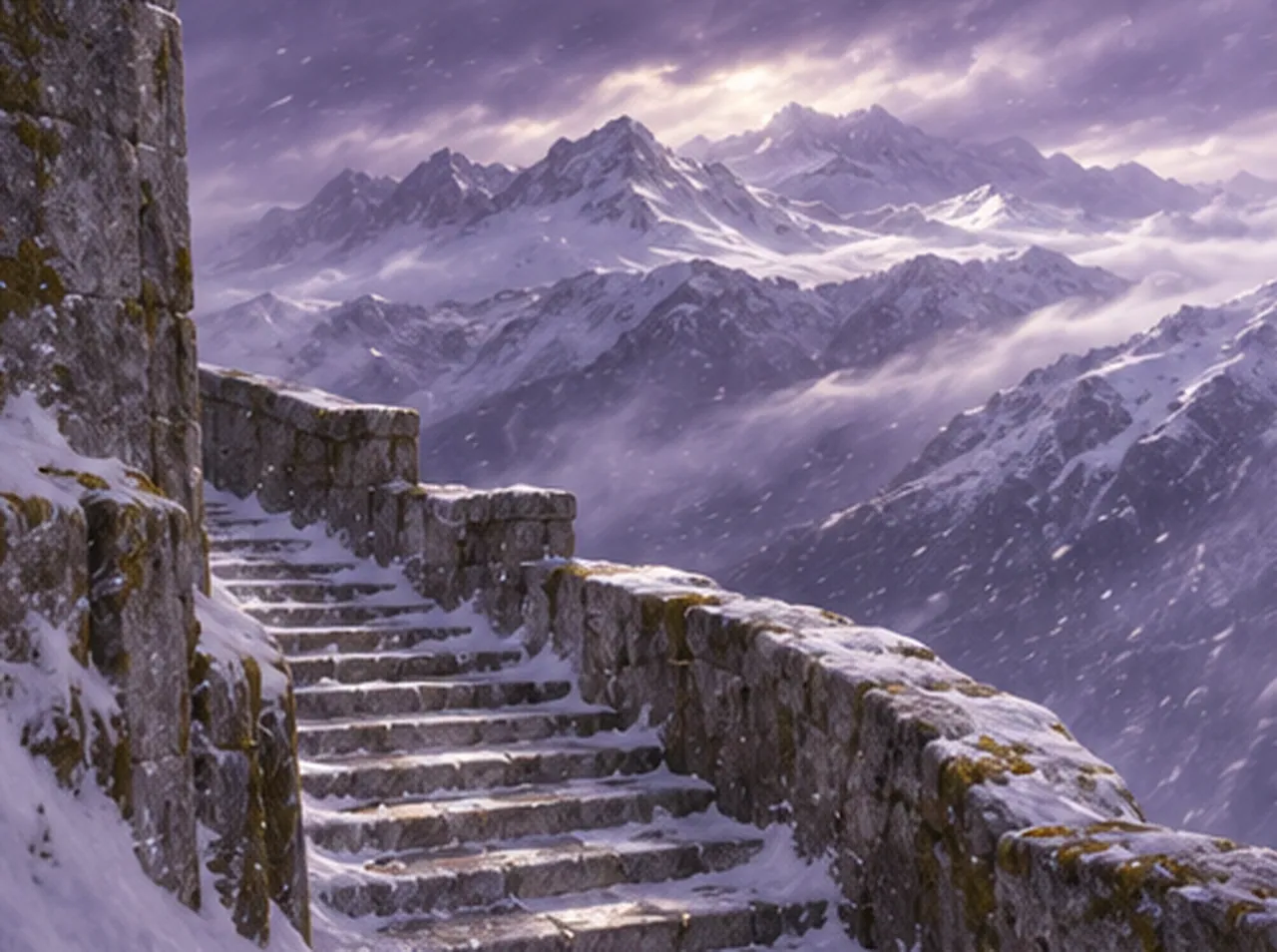
A tight circuit can make a young griffin swing toward the stone before its keeper has finished checking the landing. In the first model, a fast circle made the low sheltered bay hard to see until the moment the creature could use it. We broadened the outside track above a lower flight of steps and used a pale wall line to show when a full return still fitted. The question is how to offer more time without simply making every circle longer.
Put the outer edge at a recoverable height
The side of the stair just outside the north wall has three uneven stone courses. The upper one can remain visible across several positions in the loop. Use it as an informal boundary for the climb. The keeper can then assess a wide turn instead of trying to read the same stone while looking head on at the landing. Wind off the North Turret needs this time when snow crosses the upper corner. Give the player room to ask for a smaller descent before the outer view loses the side of the big arch.
Let the route retain a safe way inward
The broader turn has a break in the view where the tower nearly hides its lower bay. If the camera carries on a little farther, the bay returns to view below the outer landing. Keep a stone brace visible through that moment. It indicates how far the player has gone around the outside. The keeper can use the brace and the width of the turn to decide whether to come in high or stay low for a quieter arrival. A Perch for the Crosswind gives the lower bay a reason to be selected beyond its easy visibility.
Read cloud that stays on one side of the tower
Snow moving above the yard can cross the near ledge, disappear behind the stone and remain visible over part of the far roof. Carry the turn far enough outward for the player to see whether the cloud has reached the intended area. An apparently clear frame can belong to another position along the spire. Stone Edges behind a Snow Veil works with a related difference in visibility after the weather has changed. Both exercises can use a stable reference at a lower height to keep the earlier turn legible. Allow the route to go on while the keeper decides which edge belongs to the bay.
Keep a shorter exercise for a calm morning
In a calmer current the circle may not need its broadest option. The small return can start when both the upper ledge and the arcade remain visible. A future keeper can practice there before making a wider turn in stronger weather. It helps to mark both routes against the same stair instead of giving the young griffin a completely separate introduction. One early movement can work in two kinds of air without suggesting that the quicker route should always be taken. The practice needs a clear way to choose, including a chance to stop before reaching a closed space.
Ask when changing course became possible
After arrival let somebody name the place in the circle where they regained a view of the second bay. If they could see it before the turn ended, the larger circle has done useful work. If it appeared only after the turn was complete, there may be room to shift the brace, the weather, or the visible lower line. Keep a short description of both views so a later test can watch the same moment. The tower can feel taller when someone knows how to choose an arrival long before they have passed its most exposed edge.