
A Perch for the Crosswind
Return to the circuit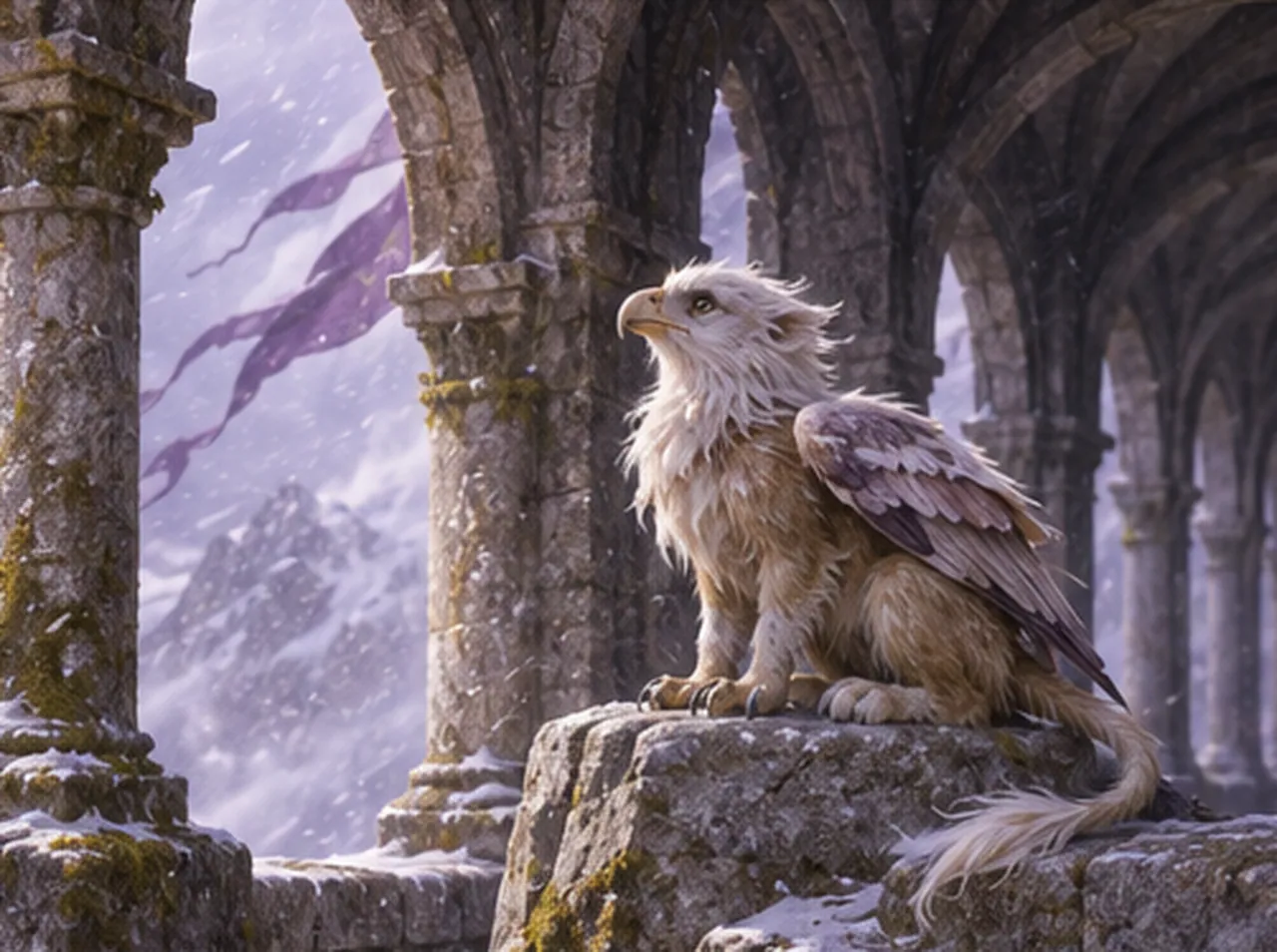
A high arcade holds a wide bay behind its first stone opening. It looks sheltered from the yard. From a young griffin’s approach, though, the opening trims the usable floor near a raised lip. A Perch for the Crosswind is a concept about reading what is available once a large creature has to slow, set both paws, and bring its wings to rest. The keeper may choose a wider turn and arrive at a less dramatic place. They still need to know why that quieter approach helps.
Look for the floor inside the line of the opening
The keeper begins on a low balcony with a view of the whole bay. A raised line across the front catches a thin reflection. The side behind it may be deep enough for a second step even if the wall begins to hide the back corner from below. Mark the width of that line and the shadow laid down by the rear wall. A Landing Wide Enough for Two Paws follows a similar test with two impressions on a soft surface. It helps identify the distance the griffin needs before any attention moves to the large stone frame overhead.
Come around while there is still open air
The first flight can follow an exposed edge and approach the landing from the north. A crosswind moves the creature toward the frame. If the keeper keeps the opening to one side while asking for a broad turn, there is room for the nose to come up again before the feet arrive. The route can be marked with an older pale stone course and a shorter edge cut into the wall, both visible from a few angles. The Outside Edge of the Flight Circle shows how to preserve an alternative without obliging the player to circle too far. If the first approach is unsuitable, the calmer opening should still appear in useful relation to the turn.
Wait through a step before folding
Pausing on the front lip leaves a claw near the edge even if the rest of the body is over the bay. The griffin can move past it with a gentle cue before the keeper asks for closed wings. This means the floor must remain clear one step beyond the most obvious place to land. Provide a second mark near the back wall to indicate how far the wings can move as they relax. A successful entry completes with an observable moment of support instead of simply switching the screen from flying to stopped.
Use close material for the quieter part
The stone inside the bay has visible polish from repeated turns. Outside, the flat parts catch cold snow. Purple reflected light gives depth to carved stone and an olive drape shows where the protected air begins. The young creature should have a clear silhouette at the rear of the frame. That silhouette can provide a second view of its folding motion without making the tallest bay a scene about spectacle.
Test settling in the arcade before expanding the spire
The prototype plan uses a short bay, an alternate turn and a small run of extra floor beyond the lip. Ask a player to say when the griffin has enough space to settle and which landmark lets them compare the two approaches. Crosswind Ledger tracks other factors such as fog and the change in ribbon movement before a gust arrives. A good early bay gives those questions a setting where one choice can be tried and returned to.