Two Ribbons below the North Roof
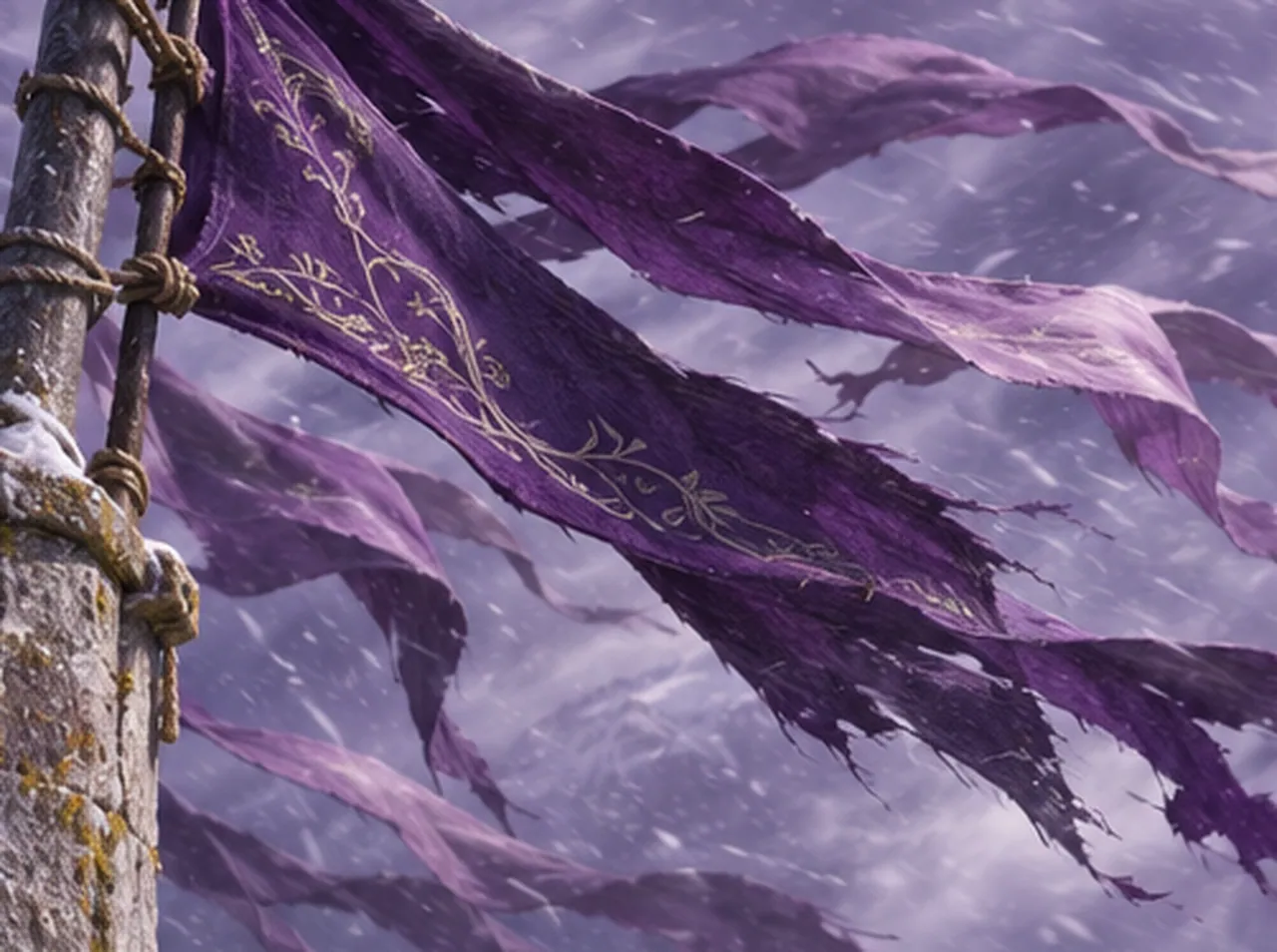
The first north tower model used one ribbon at the last point where the keeper can ask for a changed approach. It moved clearly once the wind reached the landing. That was already late enough for snow to cover the front ledge. We tried one smaller ribbon on the exposed side and kept the first one where it could show the effect closer to the griffin. This study uses those two points to tell a player which part of an uncertain movement they can observe before leaving the roof.
Pick a place for the early ribbon
Put an olive strip on a low bracket that clears the stones by only a little. It can turn in open air where the wall’s near edge has not yet blocked the whole flow. Stand at the top of the steps and find out whether its end moves before the sheltered ribbon lifts. A broad lower stripe on the stone should let someone find that spot when the fabric is edge on. Wind off the North Turret uses a low departure here. That little moment of attention keeps a keeper from thinking the first visible gust is already at the landing.
Let the sheltered one give different evidence
The second strip is high under the open ledge. It comes inward rapidly when the air changes around the corner. If the first slice of movement falls out of view, this can show how much of the wider roof the gust reaches. The player can keep an earlier observation alongside an immediate one. The position of the strip matters as much as the direction it turns. Move behind the wall and it will still flutter, with the flutter almost entirely in profile. A keeper can try the earlier view again rather than guessing whether both ribbons always agree.
Cross a narrow place in the middle
On the first north approach there is a gap where neither piece of fabric is easy to see. Put a short block of stone below the gap to give the young griffin a direction it can keep while the player checks the outside circle. The Outside Edge of the Flight Circle deals with how broad that turn can be before bringing it back toward the wall. One test asks the keeper to estimate how much time the extra arc provided, while a second asks whether they were still close enough to make a clear choice about the bay.
Check what the player compares before leaving
A fast turn of the early ribbon can look more severe than a wide sustained movement nearer the landing. Give the two strips a little difference in length so their motion cannot be sorted only by speed. The first cuts back sharply. The second can hold a flatter angle for a longer moment. Let somebody observe the relationship between these movements from the same roof one more time before asking them to choose whether the griffin should turn. Keep both views available after arrival so the trainer can show which difference was useful.
Use the cue without asking it to name the answer
A lowered ribbon can make an approach seem suitable while the top of the bay is still hard to see. Stone Edges behind a Snow Veil continues that question at a point when fog can make a larger change than the wind. The ribbon gives the player an estimate of what the gust is doing in one place. At another point the depth of a ledge can decide how to travel. A useful test ends with a simple description of the flow and a reason to try one known return. Both observations belong in the same tower, but the first cannot decide every later turn by itself.