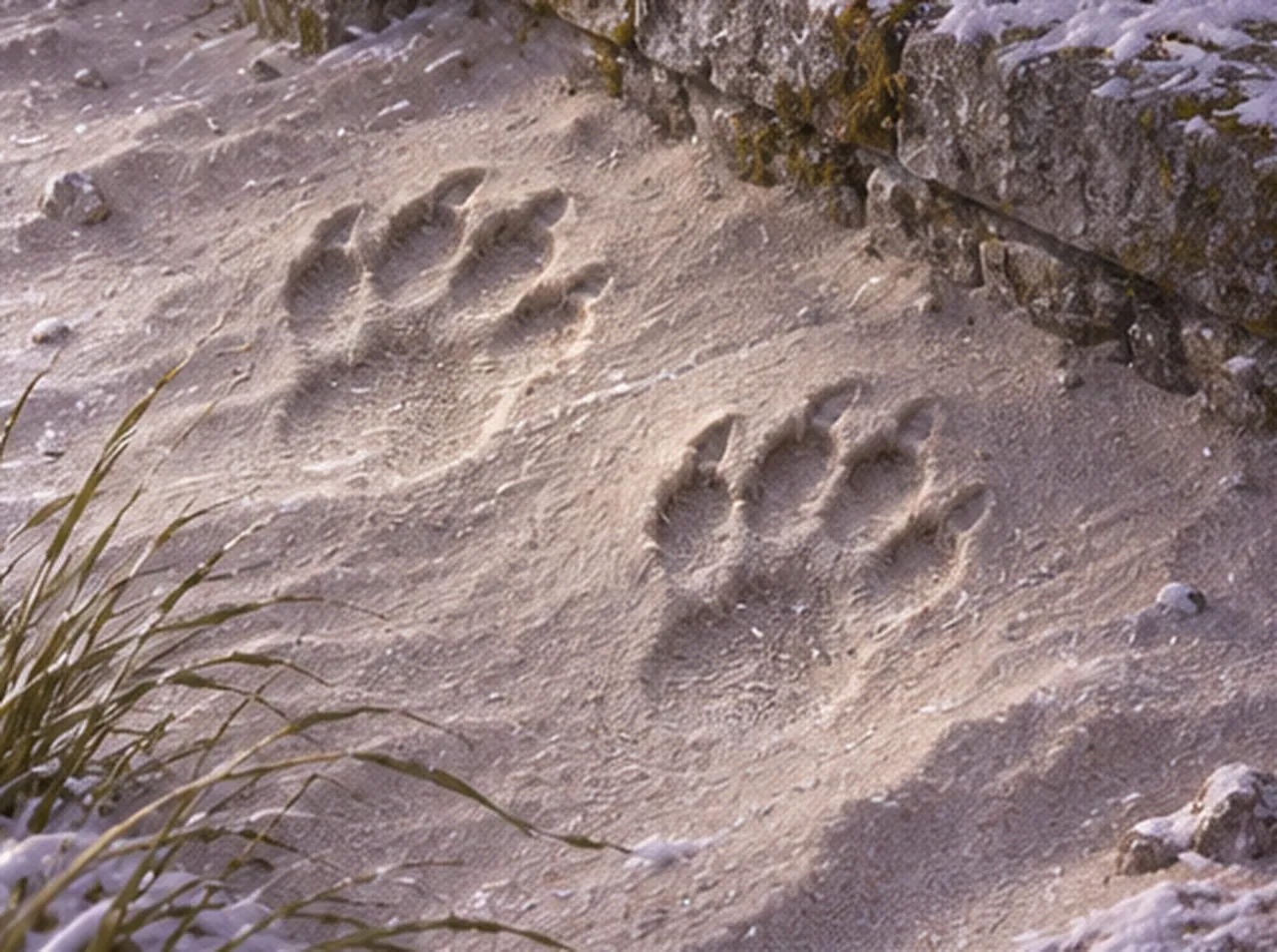
A Landing Wide Enough for Two Paws
A young griffin can touch a believable stone floor before it has enough room to settle. The first version of this bay put a low lip at the front and let the creature turn as soon as its leading paw made contact. In a side view its second paw still needed to reach across an open piece of the threshold. We made a narrow sand trial at an old training perch. Splayed paw marks give the keeper a way to measure what a small landing actually uses.
Start with the rear print
Set two impressions into a small shelf of sand. The front one appears slightly farther inward than the usual first contact at the ledge. The second tells the keeper how far the rear paw can rest without hanging over the lip. Stand beside the bay and estimate the distance from the last print to the wall. A Perch for the Crosswind allows a low view from the arcade before the keeper chooses an approach. The estimate can help preserve space to stand even when a view of the upper opening makes the bay look broad.
Give a second step a place to finish
The first landing can set the creature near the edge without making it safe to fold its wings. One more step may put both paws on flatter stone and leave more room for an easy turn. Mark that step in the sand with a shallower impression or a clearly different curve, instead of copying the first prints directly onto the game floor. A player can compare where the weight finishes with the part of the bay in view when they started. The moment of settling can come from the position of the creature rather than from a large visual announcement over the floor.
Keep the wings inside a readable margin
A folded wing brings one side of the griffin nearer to a stone frame. The player should be able to see which corner is important when they look from a low opening. Put a break in an upright seam just above the wing’s expected resting space. It can establish where the side wall begins before the feather shape covers it. The North Turret has a faster open approach, and Wind off the North Turret considers a return into a lower bay when that first roof becomes hard to approach. A clear physical margin in both places gives the young creature a chance to rest after the revision.
Compare two bays without making size their only difference
The shallower bay faces a calmer direction, so entry can be more stable even with a shorter floor. The deeper one can receive a running gust along its rim. Give the keeper a view of both while the griffin still has room to follow a turn away. Two Ribbons below the North Roof describes the two different positions at which a gust may appear. The resulting comparison should include the shape an animal can move through and the way that shape meets the air. It makes landing a choice about a place rather than a direct restatement of maximum floor width.
Try putting the lesson on the way out
At the end of the prototype show both marks from the approach that a keeper has just used. Ask which part of the stone supports the rear paw after a fold, and what the young creature could still do if it arrived too close to the front. A small return and another position can provide an answer without erasing the first attempt. The grip of the paw needs to be convincing close up. The room beyond the grip is what lets the keeper see a wider boundary, which can guide the next approach to an entirely different tower bay.